-3ab120d7.webp)
Office Hours:
Mon - Sat : 10:00 AM to 7:00 PM
For Queries Call:
+91 94064 18754
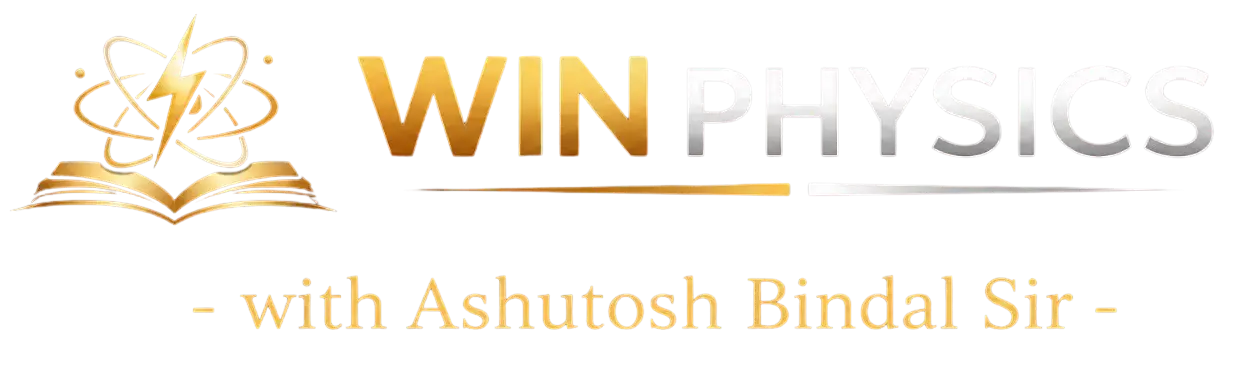
A single arrow can change the entire answer to a JEE Physics problem. Sounds very dramatic, but it isn't. Though Free Body Diagrams (FBDs) look simple on paper where you just need to draw an object, add a few force arrows, and start solving the question, but in actual JEE problems, even one missing normal force or one incorrectly drawn friction force, or one extra force can send an otherwise perfect solution in the wrong direction.
Consider the Newton's Laws of Motion and friction, as they are among the areas where students must translate a physical situation into mathematical equations, which makes FBDs a skill worth mastering early. For students preparing through Physics Coaching for JEE, then it is about developing the habit of thinking like a physicist. You must identify exactly what acts on the chosen object before touching a formula.

A Free Body Diagram is a simplified representation of an object that shows all the external forces acting on it. For example, if a block is resting on a horizontal surface, then its FBD may include:
If an external force is applied, that force must also be represented. The important word here is external. Remember that you are not supposed to draw every interaction happening inside the object.
JEE Physics doesn't only test whether you remember formulas. Some of the many questions require you to:
If the FBD is wrong, then everything after it can be wrong too. This is why good JEE Physics Coaching places so much emphasis on diagrams before equations.

This is probably one of the most common FBD mistakes where students sometimes draw forces simply because they think an object should have them. For example, a block resting on a table doesn't automatically experience friction. Further, if there is no tendency for relative motion between the surfaces, then the static friction may be zero. Similarly, students sometimes draw a force in the direction of motion. But motion itself is not a force.
For every arrow you draw, you must ask yourself what object or interaction is producing this force? Some of the common real forces include:
If you cannot identify the physical interaction responsible for an arrow, then don't draw it automatically. This simple question can prevent a surprising number of errors.
Friction causes enormous confusion. Here, many students memorize that friction always acts opposite to motion. That statement is incomplete because friction opposes relative motion or the tendency of relative motion between surfaces.
For instance, imagine a block placed on an inclined plane. The block may tend to slide downward. However, in that situation, friction acts upward along the plane. But if some external force makes the block tend to move upward, then friction can act downward.
Don't guess the direction. Instead do the following steps:
Step 1 - Identify the possible relative motion.
Step 2 - Determine which surface tends to move relative to the other.
Step 3 - Draw friction opposite to that tendency.
This is particularly important in complicated pulley, rolling, and inclined-plane questions. For the students preparing through Physics Coaching for JEE, should practice enough different friction situations to recognize the pattern rather than relying on memorized arrows.
Newton's Third Law is another major source of FBD errors. Here, students often think that action and reaction forces act on the same object. They don't. If a book rests on a table then the:
These two forces form one action-reaction pair. Similarly when the:
These form another pair.
The big rule here is that action-reaction forces always act on different objects. Therefore, you should never cancel them against each other while writing the force equation for one object.
Suppose you draw an FBD of a block. Then the normal force exerted by the table on the block belongs on the block's FBD. Such a force exerted by the block on the table does not belong to the table's FBD. This kind of distinction becomes increasingly important in multi-body JEE problems.
Sometimes students rush through a question and miss a force. At other times, they count the same force twice. Both the mistakes can completely change the answer.
For instance, consider a block attached to a string. The block may experience:
If you forget tension, then your equation is incomplete. But there is another common error where students may draw force due to tension and then add another arrow representing pull of the string. Those are the same force.
After drawing your FBD, you need to identify each force by its source. For example:
If the two arrows have the same physical source and act in the same interaction, then check whether you've accidentally counted one force twice.
Even after drawing a correct FBD, the students can lose marks while resolving forces into components. This often happens on inclined planes. For instance, an object rests on a surface inclined at an angle. Here, students may incorrectly assume:
But the correct components depend on how the angle is defined and which axes you choose. Here, the gravitational force itself always points vertically downward. So, you must resolve it according to your chosen coordinate axes.
A better method is to first draw weight vertically downward. Then select convenient axes. For an inclined plane, you must choose:
Only then resolve the weight into components. This will prevent the common mistake of changing the direction of the actual force while trying to resolve it.
This mistake deserves special attention. As students sometimes see a block, then immediately draw arrows, and start calculating. Don't do this. Just read the entire question first, and ask:
Only then construct the FBD. A few extra seconds of thinking can save several minutes of calculation.
Free Body Diagrams may look like small sketches, but they can determine whether an entire JEE Physics solution succeeds or fails. For students preparing through Physics Coaching for JEE in Indore, mastering FBDs early can make chapters such as Newton's Laws, friction, circular motion, work-energy, and connected-body systems much easier to approach. The goal isn't to draw the prettiest diagram, it's to draw the correct physical story before turning that story into mathematics.